If you are in crisis or immediate danger, please call or text the 988 Suicide & Crisis Lifeline at 988 or go to your nearest emergency room.

AI-Free Therapy: Virtual Sessions Across New York & Massachusetts

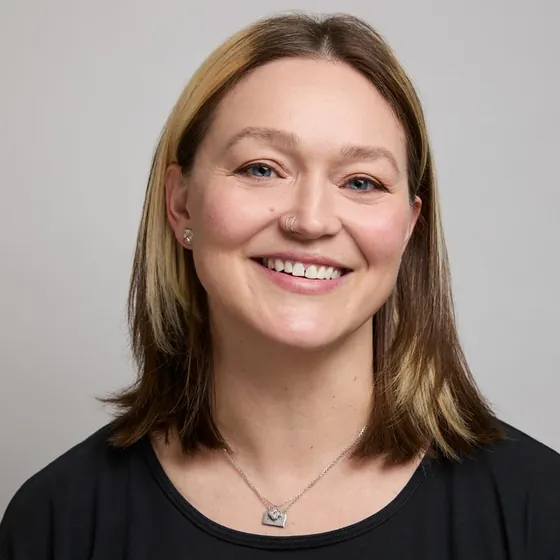
Maria Boncyk, Licensed Clinical Social Worker

My firm practice commitment: no AI note-takers, no AI transcription, no session recording, and no technology that stores or shares what you say, so the room stays truly private.

Licensed Clinical Social Worker (NY #087032, MA LICSW #1140891)
Virtual Therapy Across New York & Massachusetts
Out-of-Network (OON) Provider, Superbills Provided
15+ Years in Practice

Written by Maria Boncyk, LCSW | Reviewed July 2026

This content is for informational purposes only and does not constitute professional mental health advice, diagnosis, or treatment. If you are experiencing a mental health crisis, please contact the 988 Suicide & Crisis Lifeline at 988.

AI-free therapy means your sessions are never recorded, transcribed, or processed by artificial intelligence tools. I do not use AI note-takers, AI transcription, or any AI system that could store or share session content, in virtual sessions across New York and Massachusetts. It starts with a free 25-minute consultation.

What AI-Free Therapy Means

AI-free therapy is exactly what it sounds like: a practice where no artificial intelligence tool ever touches your session. No AI note-taker listens in the background. No transcription service converts your words into a text file on someone else’s server. No recording is made, no audio is analyzed, and no third-party algorithm summarizes what you said so a therapist can review it later. This has quietly become a meaningful distinction, because a growing share of therapy practices now run AI scribes during sessions, tools that record the conversation, transcribe it, and generate clinical notes automatically. Those tools are marketed to therapists as time-savers, and they are, but the time saved comes at a cost that is rarely explained to the client: the most private conversation in your life passes through servers owned by technology companies, governed by terms of service most clinicians have never read in full. I made a deliberate, documented decision to practice without any of it. My clinical notes are written by me, my sessions exist only in the moment they happen, and I have gone further by actively disabling AI features and data storage options on the platforms my practice does use. When you speak in session, your words reach exactly one place: the licensed clinician sitting across the screen from you.

Why This Matters for Your Privacy and Your Progress

Therapy works to the degree you can be honest, and honesty responds to conditions. Research on the therapeutic relationship consistently identifies trust and perceived confidentiality as prerequisites for disclosure, and clinical surveys show many clients already withhold information from therapists out of embarrassment or fear of judgment. Adding a recording device, even a helpful one, changes the room. People edit themselves in front of microphones. The thought sits in the back of the mind: where does this transcript go, who can read it, what happens if that company is breached, acquired, or subpoenaed. These are not paranoid questions. Health technology companies have suffered major breaches, and transcripts of therapy sessions are among the most sensitive records that can exist about a person, touching on relationships, identity, family history, workplace conflicts, and things said about people who never consented to be discussed in front of a machine. HIPAA sets a floor for how health information is handled, but a rule about how data must be protected is not the same as data never existing in the first place. The strongest privacy protection available is the one I practice: nothing is captured, so there is nothing to leak, sell, subpoena, or misuse. For clients working through trauma, identity questions, or anything they have never said out loud before, that certainty is not a luxury. It is the ground the work stands on.

Ready to Take the First Step?

AI-Free Therapy sessions are held virtually, so you can meet with Maria from anywhere in New York or Massachusetts. Request a free 25-minute consultation to see if it feels like the right fit, with no commitment required.

What This Looks Like in Practice

The commitment is concrete, not a slogan. Sessions happen over a secure, encrypted telehealth platform with recording disabled. No AI scribe or ambient listening tool runs during sessions, ever. I write my own clinical notes after each session, the way therapists did for decades before automation arrived, which means your record reflects a clinician’s considered judgment rather than an algorithm’s summary of your sentences. Where the practice uses software at all, scheduling, billing, the telehealth platform itself, I have taken measures to switch off AI features and unnecessary data storage, and reducing data collection is treated as an ongoing responsibility rather than a one-time checkbox. The commitment is also written into the practice’s privacy policy, so it is a documented standard you can hold me to, not a marketing line. None of this changes what therapy itself looks like. You still get the full depth of my integrated approach, EMDR processing, attachment and relational work, somatic awareness, and psychodynamic depth, delivered in weekly 50-minute virtual sessions anywhere in New York or Massachusetts. The only difference is what is absent: no recordings, no transcripts, no machine in the middle.

Who This Matters Most For

Every client benefits from genuine privacy, but for some people it is the deciding factor in whether therapy is possible at all. Survivors of complex trauma and childhood trauma often carry experiences of having their trust violated by people and institutions that were supposed to protect them, and asking them to speak about those experiences in front of a recording system repeats the shape of the original wound. Clients navigating identity, including LGBTQIA+ clients who may not be out in every part of their lives, need absolute certainty that what they explore in session cannot surface anywhere else. People in visible or sensitive careers, healthcare workers, attorneys, educators, public figures, executives, and fellow therapists seeking their own treatment, have professional reasons to keep their inner lives out of any database. Immigrants and clients from communities with long histories of surveillance often carry a justified wariness about where their words end up. And a growing number of people simply feel the general unease of living in an era where everything is captured, and want one hour a week that belongs entirely to them. If any of that describes you, this practice was structured with you in mind, wherever you are in New York or Massachusetts.

Questions Worth Asking Any Therapist

If you are comparing therapists, you deserve to know how each one handles your words, and most will answer honestly if asked directly. Ask whether they use an AI note-taker or transcription service during sessions, and if so, which company runs it and where the transcripts are stored. Ask whether sessions are recorded for any purpose, including training or quality review. Ask what happens to your data if the tool’s parent company is breached or sold. Ask whether AI features are enabled on their practice management and telehealth platforms, because many tools switch these on by default and busy clinicians never turn them off. A therapist who has thought carefully about these questions will answer them without defensiveness. My answers are simple: no AI note-takers, no transcription tools, no recordings, AI features disabled on practice platforms, and a standing commitment to collect as little data as the work allows. If privacy has been the thing keeping you from starting therapy, the free 25-minute consultation is a good place to ask me these questions yourself, from anywhere in New York or Massachusetts.

Where I Use AI-Free Therapy

This approach shows up most often in the following areas of my work. Each links to a full page on how therapy helps with that concern.

Frequently Asked Questions

No. I never record, transcribe, or process our sessions with any AI tool. We meet over a secure, encrypted telehealth platform with recording disabled, and I write my own clinical notes after each session. Your words exist only in the conversation itself.

Yes, increasingly. Many practices now run AI scribes that record sessions, transcribe them, and auto-generate clinical notes on third-party servers. Some disclose this clearly, some mention it only in intake paperwork. It is always reasonable to ask any therapist directly what tools are running during your session.

The clinical work is unchanged: you receive the same integrated EMDR, attachment, relational, somatic, and psychodynamic approach in weekly 50-minute sessions. What changes is the environment, a room with no recording layer, which many of my clients find makes deeper honesty easier to reach.

I run sessions on a secure, encrypted telehealth platform that meets HIPAA requirements, with AI features and unnecessary data storage disabled. I maintain clinical records according to HIPAA and New York and Massachusetts regulations, and as the sole clinician of this practice I am the only person with access to them.

I have written it into my privacy policy as a standing commitment, not just stated it on this page. I do not use AI note-takers, AI transcription tools, or AI systems that risk storing or sharing session content, and reducing unnecessary data collection is an ongoing priority in my practice.

Curious Whether AI-Free Therapy Fits You?

The free 25-minute consultation is the place to ask. Describe what you are dealing with, and get an honest read on whether this approach makes sense for your situation.