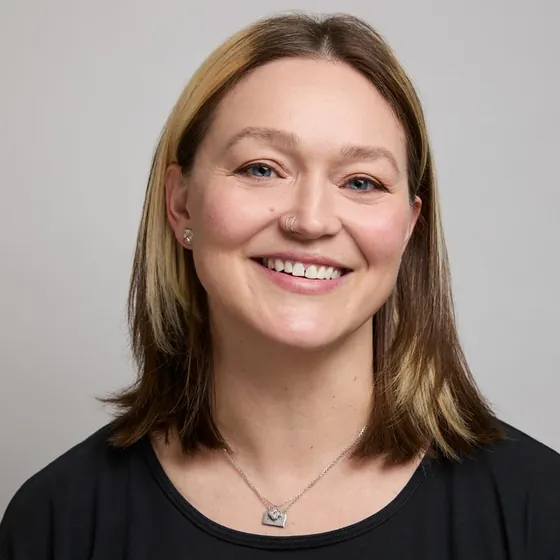
Written by Maria Boncyk, LCSW | Reviewed July 2026
This content is for informational purposes only and does not constitute professional mental health advice, diagnosis, or treatment. If you are experiencing a mental health crisis, please contact the 988 Suicide & Crisis Lifeline at 988.
Maria Boncyk, LCSW provides fully virtual childhood trauma therapy to teens and adults across New York and Massachusetts. Using EMDR and attachment-focused approaches, she helps clients process difficult early experiences, from emotional neglect to frightening home environments, so those years stop steering adult life. Start with a free 15-minute consultation.
How Childhood Follows You Into Adulthood
A hard childhood rarely stays in childhood. You may remember specific events, or mostly an atmosphere, and still feel the effects today.
- An inner critic that speaks in a familiar voice.
- Strong reactions to criticism or conflict, or relationships where you cling or keep people at arm’s length.
- A tiring need to earn rest, care, and belonging that others seem to receive freely.
- Some deep wounds come from what did not happen, like comfort that never came or a parent who was emotionally elsewhere.
- A chaotic or frightening home teaches a child that safety is temporary, love has conditions, and needs cause problems.
- This is not a character flaw. It is unfinished business, and it can be worked through.
How Maria Works With Early Wounds
Childhood trauma sits at the heart of Maria’s complex trauma specialization. Stabilization comes before processing, and you control what is approached and when.
- EMDR is recognized by the World Health Organization and the American Psychiatric Association as an evidence-based trauma treatment.
- EMDR helps reprocess early memories and the beliefs they left, like I am not safe or I am too much.
- Maria completed EMDR basic training in 2021, intermediate in 2022, and Relational EMDR in 2026, which suits wounds formed in relationships.
- Attachment-based and psychodynamic work show how early bonds shaped the way you handle closeness today.
- Somatic awareness helps with what the body still holds, like bracing, shallow breathing, or shutting down.
- Nothing about this work requires flooding yourself with painful material to make progress.
Ready to Take the First Step?
Childhood Trauma Therapy sessions are virtual, anywhere in New York or Massachusetts. Start with a free 15-minute consultation, with no commitment.
What the Healing Process Looks Like
After a free 15-minute consultation, sessions run weekly for 50 minutes over secure video. This work usually spans many months, sometimes longer.
Building the foundation
You share your history at whatever depth feels manageable, set goals, and learn regulation skills that make deeper work safe.
Processing with EMDR
You target the experiences and beliefs that drive your struggles today.
Consolidating change
You practice relationships and a view of yourself that are no longer organized around old danger.
Making room for grief
Grieving the childhood you deserved is part of the work. Early wins, like a quieter inner critic, often come before the deepest layers resolve.
Who This Therapy Is For
You do not need dramatic memories to qualify. If your early years still shape your present in ways that hurt, that is reason enough to reach out.
- Adults who look fine on the outside but carry perfectionism, chronic guilt, people pleasing, or trouble trusting.
- People with depression that has no clear present-day cause.
- Teens 13 and up still living with hard family dynamics who need support and skills now.
- People who can explain exactly why they are the way they are, yet still feel the same triggers in their body.
- Emotional neglect leaves real marks, and doubting whether your childhood was bad enough is often one of them.
Childhood Trauma Support Across New York and Massachusetts
Virtual sessions let you work through hard material from a space you control, without walking out of an office and straight into a busy street.
- Join from a city apartment, a room upstate, or home in Massachusetts.
- Sessions run Monday through Thursday, 9 AM to 7 PM Eastern.
- Maria is an out-of-network (OON) provider, confirms coverage details with you first, and provides monthly invoices for reimbursement.
- The practice is fully AI-free, with no recording and no AI transcription.
- A free 15-minute consultation is where it starts, whenever you are ready.